Strategy
KOL vs. KOC in China: how to pick the right influencer for your brand

Spend too much on the wrong KOL and you burn your budget. Spread too thin across KOCs and nobody notices. Here is how to get the balance right.
What are KOLs and KOCs?
KOL stands for Key Opinion Leader. These are the established names. Millions of followers, high production quality, strong personal brands. They charge upfront fees plus sales commissions. The best ones are booked months out.
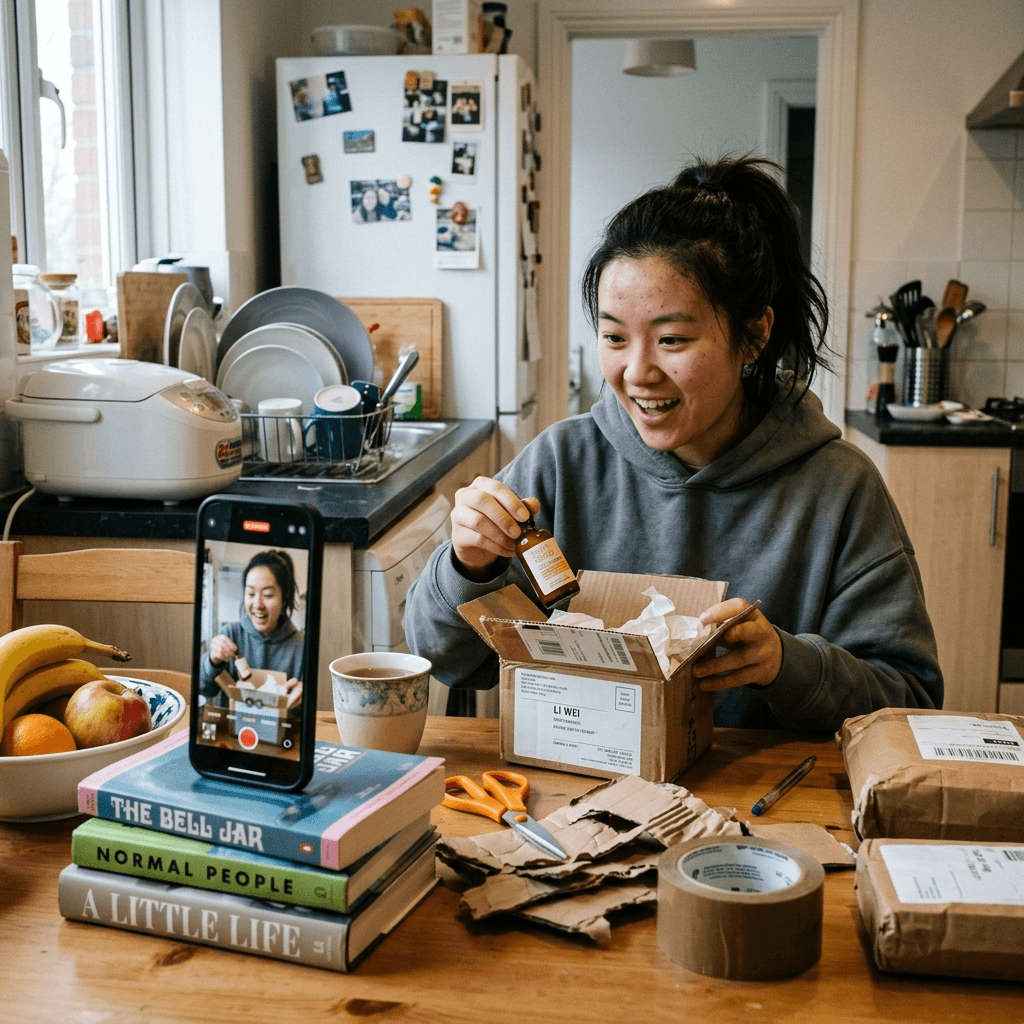
KOC stands for Key Opinion Consumer. Everyday users with smaller followings, usually between 1,000 and 100,000. They post product reviews, unboxing clips, and personal recommendations. The content is less polished and it tends to feel more honest.
Both play a role in how brands grow in China. The question is which one to use, when, and how much to spend on each.
Why this distinction matters
In China’s influencer ecosystem, the difference between KOLs and KOCs goes well beyond follower count. It is about how audiences respond to the content.
According to iiMedia Research, KOC influence on consumer purchasing decisions ranks just behind KOLs and well above celebrities or general internet personalities. It comes down to trust. KOC content reads like a recommendation from someone in your circle. KOL content, even when it is well made, reads like a paid endorsement.
Younger consumers are especially skeptical. Gen Z audiences in China increasingly question sponsored content. That does not mean KOLs are useless. But the era of dumping your entire budget on one big name and hoping for results is mostly behind us.
The fake follower problem
This is the part most people in the industry know about but do not discuss openly enough.
An MCN insider told Rancaijing that only 10-20% of the KOLs managed by his company had completely organic reach. The rest relied on paid amplification to inflate their metrics.
CCTV News investigated this supply chain in 2019 and documented how cheap it is to manufacture fake engagement on Chinese social platforms.
Creating a fake 100,000+ view count on a post can cost under 1,000 yuan. For brands investing tens of thousands per campaign, the risk of partnering with inflated accounts is not theoretical. It happens all the time in this market.
This is why verification matters more than raw numbers. Engagement rate, comment quality, audience demographics, and purchasing behavior data tell you far more than the follower count on someone’s profile page.
Platforms are getting better at detecting this. Xiaohongshu’s Pugongying platform and Douyin’s Xingtu both provide audience authenticity data when brands book influencers through official channels. But off-platform deals with no verification still happen constantly.
How brands layer KOLs and KOCs together
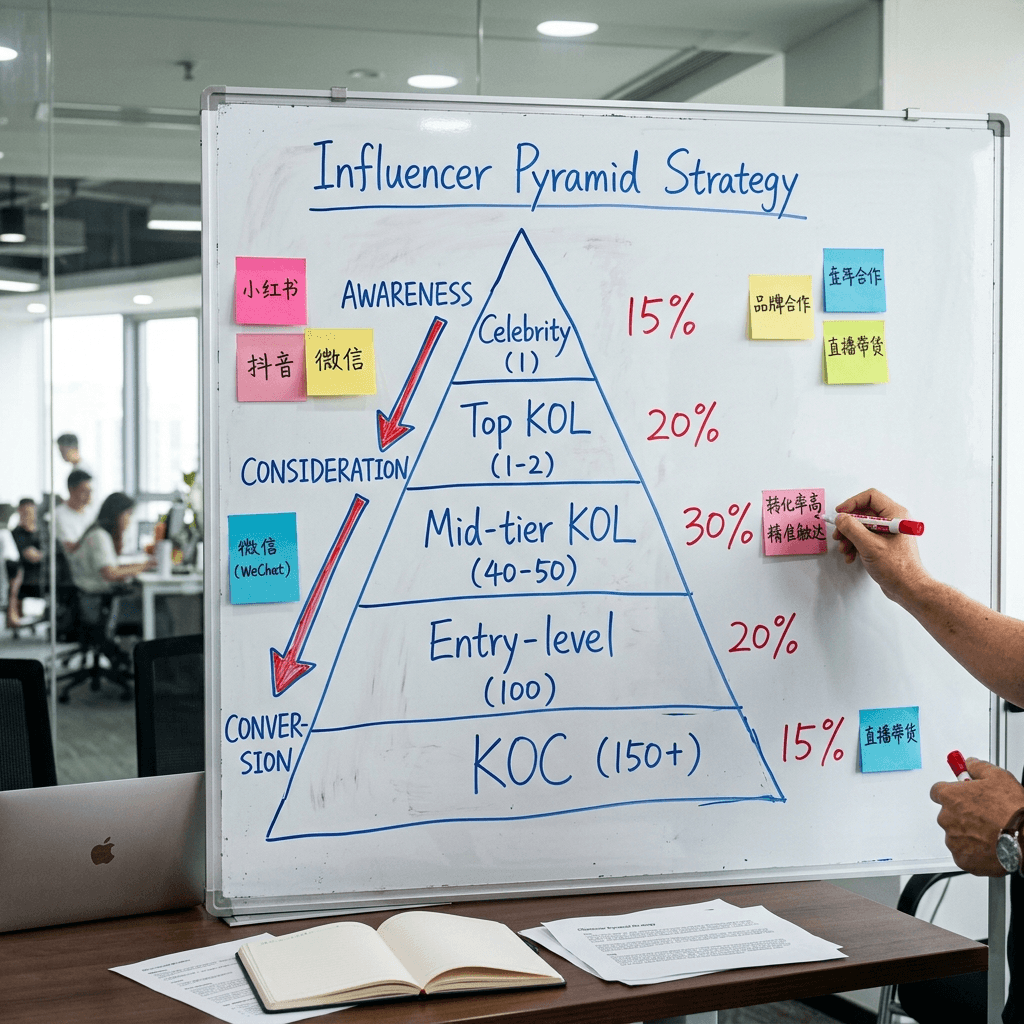
The most effective approach in China is layered. The industry calls it the “pyramid” model.
Perfect Diary helped popularize this strategy around 2020-2021. According to data from GrowthBox, their influencer investment on Xiaohongshu roughly followed this ratio: 1 celebrity, 1 top KOL, 3 head-level creators, 46 mid-tier, 100 entry-level, and 150 KOCs.
Each layer does a different job. Top KOLs set the conversation and generate initial buzz. Mid-tier creators go deeper in specific product niches. KOCs push authentic content across communities and give hesitant buyers the final nudge.
The model has evolved since then. In 2025, the mid-tier layer has become the most important. During the Double 11 shopping festival, mid-tier hosts with annual sales of 1-10 billion yuan contributed 45% of total live commerce GMV, with an average single-session ROI of 1:8.
Source: 100EC.cn, 2025 Double 11 Data Report
Meanwhile, the market share of top-tier mega KOLs dipped from 32% to 30%, reflecting a deliberate push by platforms toward decentralized traffic distribution.
Right now, the middle of the pyramid is where the best return sits.
How influencers get paid
Payment structures depend on the tier.
Top KOLs negotiate a flat booking fee per appearance, plus a percentage of sales. For live commerce, this hybrid model is how the biggest names work. The fee secures time on their schedule. The commission keeps incentives aligned.
Mid-tier KOLs work on smaller flat fees plus CPS. Some accept pure commission if the brand or product is strong enough to drive volume on its own.
KOCs mostly work on pure commission or receive free products in exchange for content. At scale, platforms coordinate KOC campaigns through group leader systems with a service fee plus per-sale commission.
| Influencer tier | Typical payment model |
|---|---|
| Top KOL or celebrity | Flat fee + CPS commission |
| Mid-tier KOL | Smaller flat fee + CPS |
| Entry-level KOL | CPS only or low flat fee |
| KOC | Free product + CPS or pure CPS |
Commission rates range by category. Beauty and skincare sit at 10-25%. Fashion at 8-15%. Electronics at 3-8%. Luxury is highly negotiable, typically 5-15% plus a fixed fee.
Brand self-broadcasting is growing fast
One of the biggest shifts in 2025 is that brands are building their own livestream operations instead of relying entirely on external KOLs.
During the 2025 Double 11, brand self-broadcasting accounted for 40% of total live commerce GMV, up 8 points from 2024. Companies like Anta, L’Oreal, and Xiaomi have in-house livestream teams of 50+ people running daily broadcasts.
Source: 100EC.cn
Some brands now generate more revenue from self-broadcasting than from all their KOL partnerships combined.
For international brands, this means you have options. You do not need to start with expensive KOL deals. You can build a self-broadcasting operation that gives you control over messaging, better margins, and a direct channel to your audience. The tradeoff is that it takes real investment: studio, hosts, content production, and ad spend to drive viewers.
How to think about budget
The right mix depends on where you are.
Brands entering China for the first time usually get the best results starting with KOC seeding on Xiaohongshu. Product gifting, honest reviews, authentic short videos. Build a base of organic proof before spending big on KOLs. This is also the cheapest way to test what messaging resonates.
Brands already in China and looking to scale should focus on 2-3 mid-tier KOLs in their specific product category. Structured campaigns with clear briefs, not scattered one-off posts. Mid-tier KOLs give you the best ratio of cost to conversion right now.
Brands going all in should build the full pyramid and start investing in self-broadcasting. That combination of external reach and owned live commerce is what is working best heading into 2026.
And regardless of budget: verify every influencer before you sign. The number on someone’s profile page is the least reliable data point in this entire ecosystem.
Need help setting up WeCom for your brand in China?
Book a call